During a visit to the BAT-Cemevi, Miersch described as “justified” the demands concerning the fact that defendants in the Sivas massacre continue to live in Germany. The meeting also covered the problems faced by Alevis in Turkey, the dergâhs, compulsory religious education and the demands of Alevi organisations.
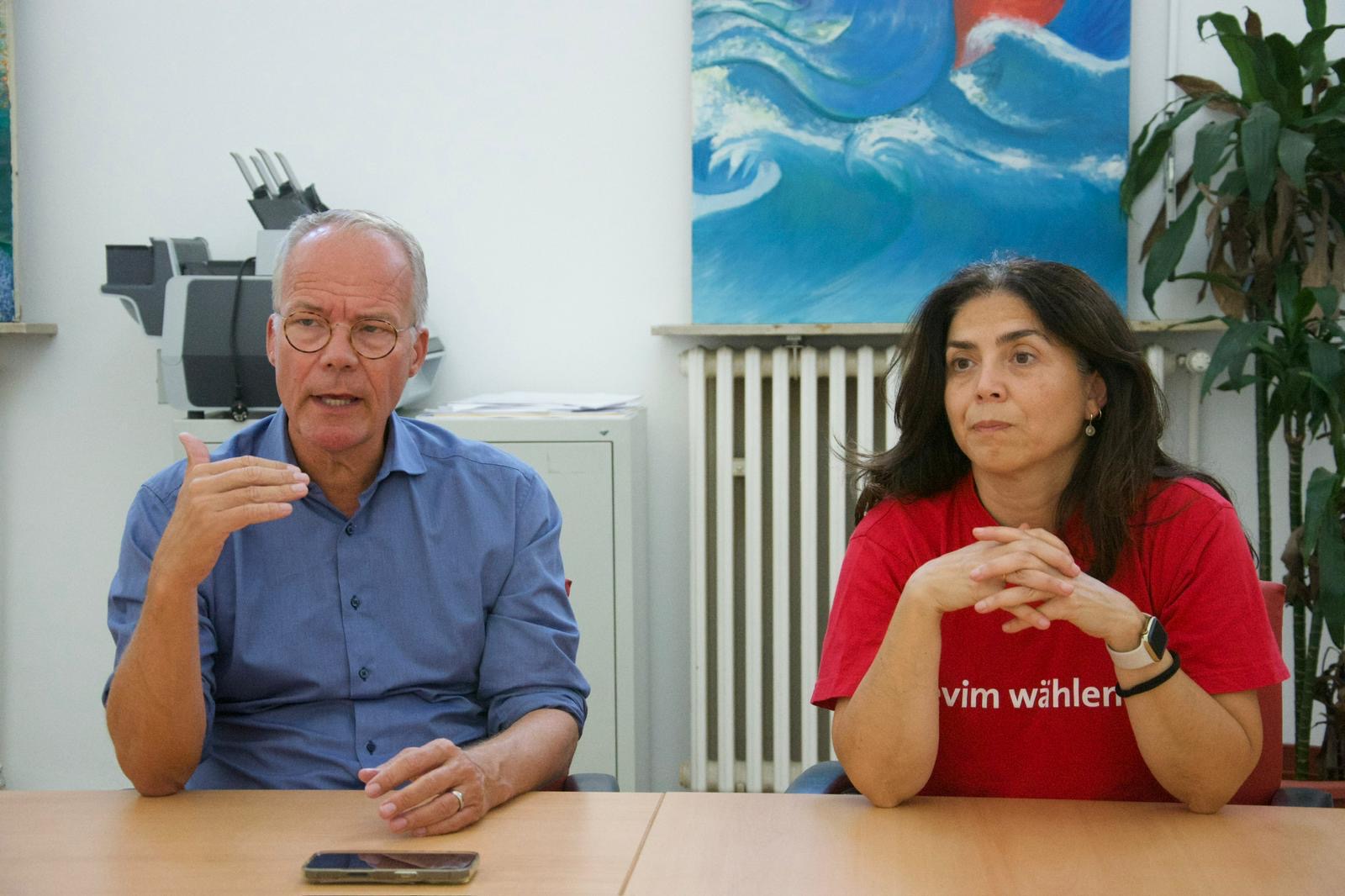
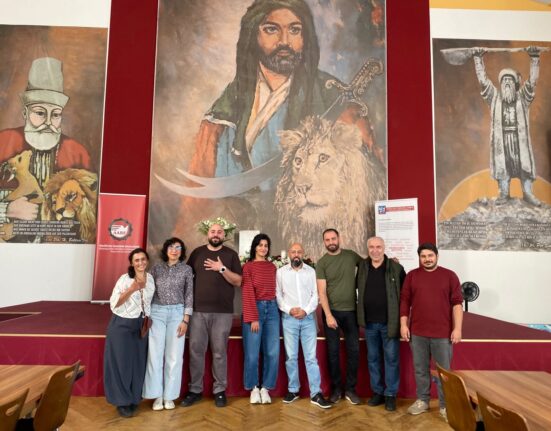
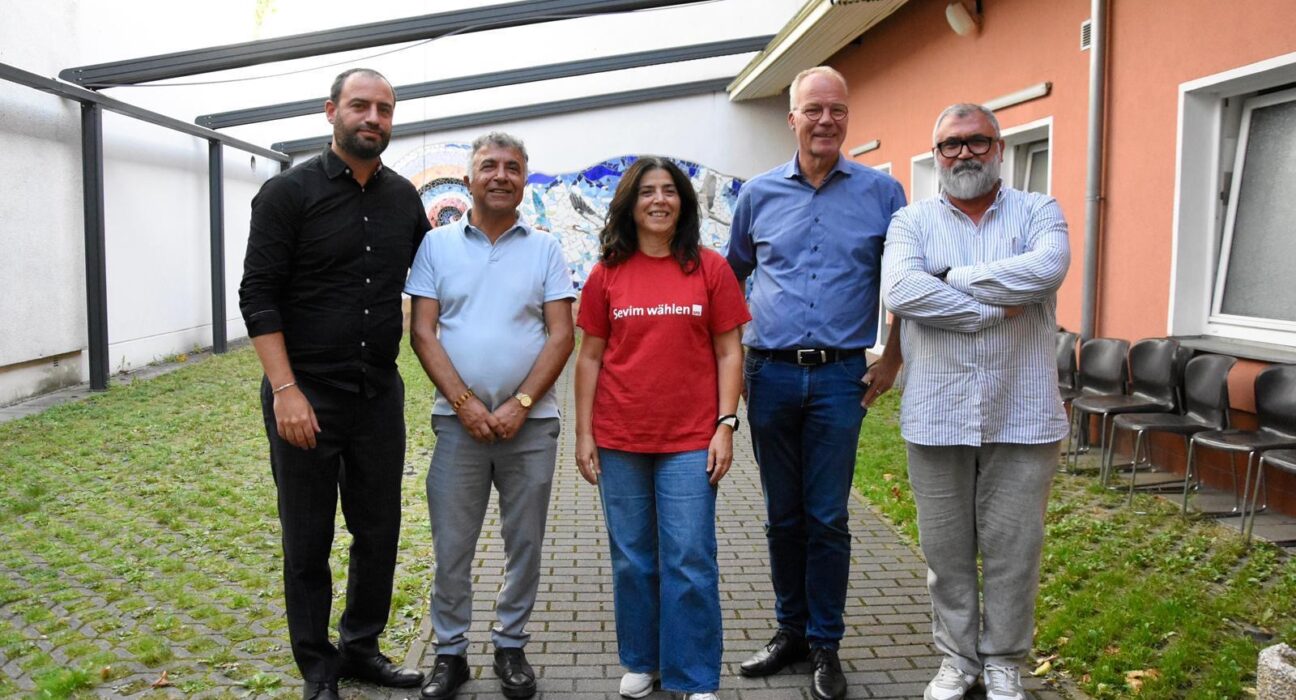
Dr Matthias Miersch, leader of the Social Democratic Party (SPD) parliamentary group in the Bundestag, and Sevim Aydın, SPD Member of the Berlin House of Representatives, visited the BAT-Cemevi (Alevi house of worship) yesterday to learn about the Alevi community and faith. Miersch and Aydın were welcomed by Kadir Şahin, Second Chair of the BAT-Cemevi, former BAT-Cemevi Chair Metin Mat Dede and researcher and author Haydar Selçuk.
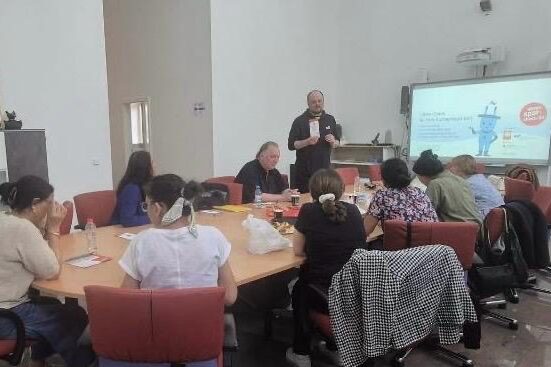
Touring the Cemevi grounds, Miersch and Aydın were given information about the Alevi faith, the work of the institutions and the social and cultural activities of the Alevi community in Berlin. One of the main topics of the meeting was the Madımak massacre in Sivas on 2 July 1993 and the situation of the defendants living in Germany.
Şahin: “We want the defendants to be put on trial”
Kadir Şahin, Second Chair of the BAT-Cemevi, pointed out that some of the defendants in the Sivas massacre are living in Germany and conveyed to Miersch and Aydın the demand that they be put on trial. “Defendants in the Sivas massacre live in Germany. They run businesses and benefit from all the opportunities Germany offers. We want the defendants to be put on trial. In Turkey the case was dropped because of the statute of limitations. The defendants went unpunished,” Şahin said.
Şahin said they wanted the German Bundestag and members of parliament from all political parties to be informed about the Sivas massacre and the defendants, and that they were requesting a meeting at which the issue would be addressed regardless of party lines.
“We want to inform the Bundestag and the MPs of all parties about the Sivas massacre and the defendants. We are requesting a cross-party meeting on this,” Şahin said.
Miersch: “Such a meeting should take place in the Bundestag”
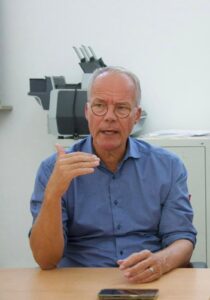
Dr Matthias Miersch, leader of the SPD parliamentary group in the Bundestag, said it was not right that the defendants in the Sivas massacre should go on living in Germany without being punished.
Responding to the BAT-Cemevi’s request for a meeting in the Bundestag with the participation of all political parties, Miersch said: “I consider your request justified. Such a meeting should take place in the Bundestag. It would also be very useful for us. It is astonishing that the defendants have not been punished.”
Metin Mat Dede: “People are marginalised because of their Alevi identity”
Former BAT-Cemevi Chair Metin Mat Dede gave his assessment of the problems faced by Alevis in Turkey. Mat Dede said that Alevis face discrimination not only in the area of freedom of belief but also in various areas of social and public life, that people are marginalised because of their Alevi identity and that there is discrimination in working life too. Noting that Alevis are not represented in the upper echelons of the state, Mat said: “Today you do not see people with an Alevi identity in senior state posts such as governor, district governor, university rector or police chief.”
Mat also said that the European Court of Human Rights has issued rulings on the free practice of the Alevi faith in Turkey, but that Turkey does not implement them.
Criticising the fact that Alevi pupils are confronted with the tenets of Sunni Islam in compulsory religious education, Mat said this was one of the fundamental problems of the Alevi community.
“A process aimed at erasing Alevism from history is under way”
Drawing attention to the situation of Alevi dergâhs and shrines, Mat stressed that their historical and cultural identity must be protected. He argued that writings, symbols and historical documents found in dergâhs and shrines are being taken away on various pretexts for research purposes, and said that written documents held by Alevis are also being collected in the process. “Written documents held by Alevis are taken on various occasions in the name of research, and a new history is being written to suit them, divorced from the truth. This means erasing Alevism from history,” Mat said.
Mat argued that the demands Alevi organisations have voiced for years are being ignored by the state, and said attempts are being made to impose a particular understanding on the Alevi community through certain Alevi associations set up by the state. He also said that the press and media contain slanderous and degrading statements about Alevis, and that insufficient legal sanctions are applied to those responsible. Arguing that the state’s resources and power are being used to tie Alevi associations and cemevis to state-backed structures, Mat said the Alevi movement in Europe was also affected by this process.
Response to accusations against the AABF
Metin Mat Dede also addressed accusations against the Confederation of Alevi Unions in Europe (AABK). Mat noted that President Recep Tayyip Erdoğan’s remark, aimed at the Alevitische Gemeinde Deutschland e.V. (Alevi Community of Germany, AABF), that “they received 3 million euros from the German state” had also been raised in the German Bundestag, and stated that these accusations were untrue. Mat said the remarks were intended to obstruct the work of the AABF and to discredit it.
Haydar Selçuk: “This is not just a problem of the AKP era”
Researcher and author Haydar Selçuk said the problems faced by Alevis in Turkey cannot be reduced solely to the period of the current government. Noting that for many years the approach towards Alevis had been one of “denial, destruction and disregard”, Selçuk said: “This is not a situation that arose only with the AKP. This is the attitude of the hundred-year-old Republic.” Selçuk said that for 25 years Turkey has been governed by a political movement that came to power with Europe’s support on the strength of promises of EU membership, democratisation and the fight against bans, poverty and corruption, and that Europe too must therefore confront the Alevi question in Turkey.
“Europe needs to confront the treatment of Alevis in Turkey and the historical background to that treatment,” Selçuk said, adding that the problems faced by Alevis should also be taken into account when Europe’s policies towards Turkey are assessed.
“Our dergâhs are being turned into museums”
One of the issues Selçuk raised was the conversion of Alevi dergâhs into museums. Selçuk said that the dergâhs are historical centres of Alevi faith and culture and that, although Alevis are their rightful owners, today Alevis, like everyone else, have to pay to enter them.
“Our dergâhs are being turned into museums. Everyone, starting with us, the rightful owners of these dergâhs, can only enter these places by paying,” Selçuk said. Noting that the core demands Alevi organisations have voiced for years have still not been met, Selçuk listed them as follows:
- Return of the dergâhs to the Alevi community.
- Abolition of compulsory religious education.
- Legal status for cemevis.
- Dissolution of the Presidency of Religious Affairs (Diyanet İşleri Başkanlığı).
- An end to the forced building of mosques in Alevi villages.
“These demands, which have been among the core demands of democratic Alevi organisations for years and are raised at every opportunity, are not taken seriously; on the contrary, these practices are still continuing,” Selçuk said.
“There must be no statute of limitations for crimes against humanity”
Noting that the Sivas massacre was one of the key topics of the meeting, Selçuk said that no statute of limitations should apply to crimes against humanity and massacres.
“There must be no statute of limitations for crimes against humanity and massacres; this must be one of our core demands,” Selçuk said.
Report: BAT-Cemevi Press Office
Photos: Ulaş Yunus Tosun